Conflict resolution Power Skills for high-performing teams
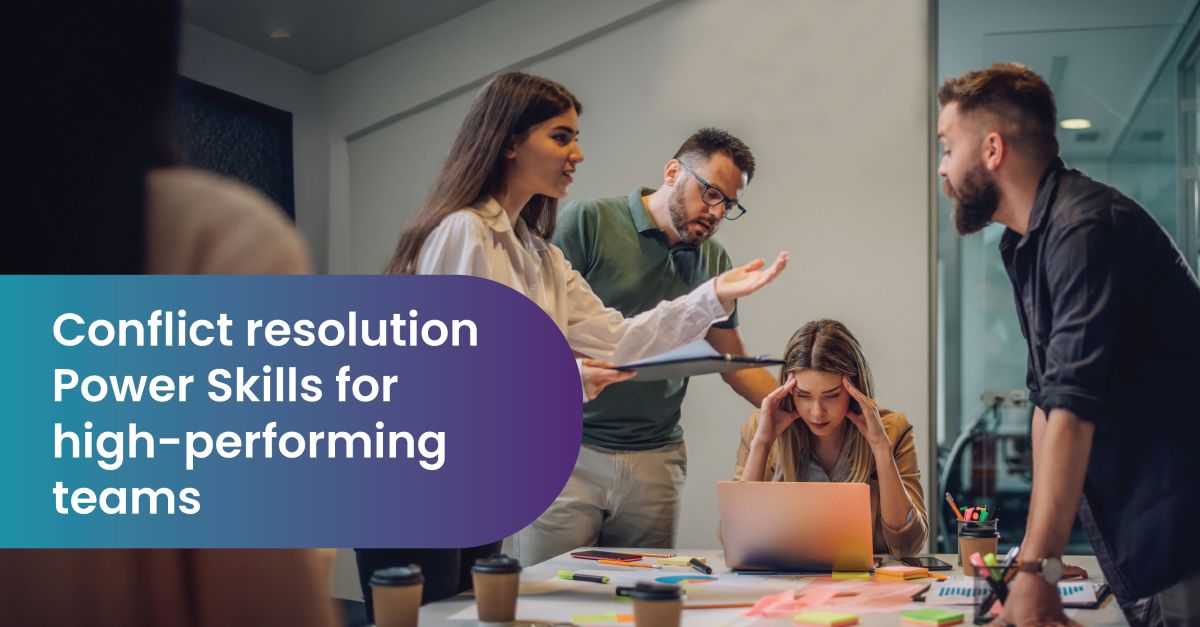
Conflict is often viewed as something to avoid. But in reality, conflict is inevitable in any team. In fact, when managed well, it can be a catalyst for growth, innovation, and stronger collaboration. What makes the difference is whether teams have the Power Skills to resolve conflict constructively.
This article explores why conflict arises, how it can become destructive, and how developing conflict resolution Power Skills helps Australian teams perform at their best.
Why conflict arises in teams
Conflict is natural in environments where people bring different skills, perspectives, and pressures. Common triggers include:
- Competing priorities: Different teams push for different outcomes.
- Miscommunication: Instructions get misunderstood or intentions misread.
- Resource constraints: Limited budgets or time create friction.
- Personality differences: Styles clash, especially under pressure.
- Change: New systems or processes create uncertainty.
In hybrid Australian workplaces, these challenges are amplified by distance, digital communication, and cultural diversity.
The cost of unresolved conflict
Left unmanaged, conflict drains productivity, damages morale, and increases turnover. The Australian HR Institute estimates workplace conflict costs billions in absenteeism, presenteeism, and disengagement annually.
Signs of unhealthy conflict include:
- Teams avoiding communication.
- Declining engagement survey scores.
- Rising turnover or absenteeism.
- Increased escalations to senior leadership.
Why conflict can be constructive
Not all conflict is negative. Healthy disagreements generate new ideas and push teams to think differently. Constructive conflict happens when people feel safe to challenge ideas without fear of personal attack. Leaders with strong Power Skills create environments where this is possible.
Power Skills for conflict resolution
- Active listening: Understanding the real issue beneath surface arguments.
- Empathy: Acknowledging emotions to reduce defensiveness.
- Communication clarity: Framing issues around shared objectives.
- Facilitation: Structuring conversations to reach resolution.
- Negotiation: Finding win-win solutions.
Building conflict resolution capability
Training programs such as Managing challenging behaviour and Facilitating for results give leaders and teams practical tools. Role-play, coaching, and scenario-based learning prepare professionals to manage disputes constructively.
Case study
A Melbourne healthcare organisation implemented conflict resolution training for nurse unit managers. Within 12 months, turnover decreased by 18%, and engagement surveys showed stronger perceptions of leadership effectiveness.
FAQs
Q: Isn’t conflict always negative?
No. Constructive conflict is a driver of innovation.
Q: Can conflict resolution be taught?
Yes. With training and practice, individuals can develop these Power Skills.
Q: What’s the leader’s role in conflict?
To create safe spaces, model constructive behaviour, and facilitate resolution.
Conclusion
Conflict is inevitable, but poor conflict management is not. By developing Power Skills in listening, empathy, and facilitation, teams can turn conflict into collaboration and growth.
👉 Explore our conflict resolution courses to build stronger teams.