How to engage stakeholders effectively with Power Skills
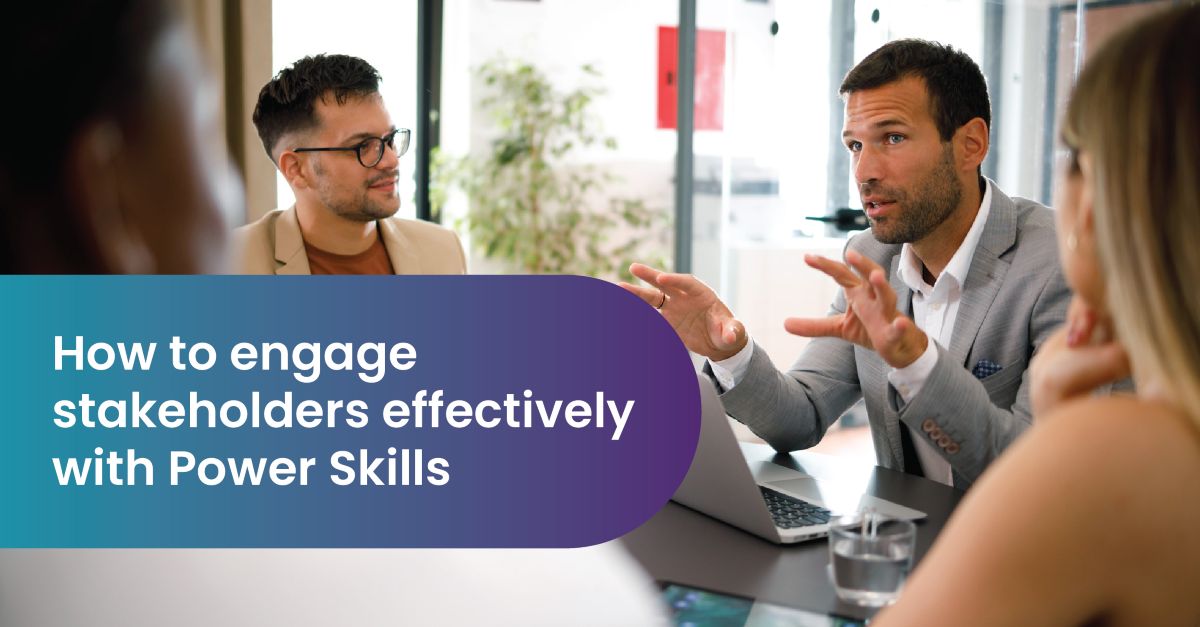
Every project lives or dies by stakeholder engagement. No matter how advanced the technology or how skilled the delivery team, without stakeholder buy-in projects stall, face resistance, or fail altogether. Effective stakeholder engagement depends on Power Skills — the ability to communicate, influence, and build trust.
This article examines why stakeholder engagement is challenging, how Power Skills address those challenges, and how training strengthens stakeholder relationships.
Why stakeholder engagement matters
Stakeholders are not just sponsors. They include clients, partners, end-users, regulators, and communities. Their support determines whether projects are delivered smoothly or encounter resistance.
Strong engagement ensures:
- Alignment: Clear understanding of objectives.
- Commitment: Stakeholders actively support outcomes.
- Adoption: End-users embrace change.
- Trust: Issues are surfaced early, not escalated late.
Challenges in stakeholder engagement
- Diverse priorities: Each stakeholder has different goals.
- Limited time: Executives are often stretched.
- Resistance to change: People fear the unknown.
- Hybrid communication: Remote work complicates alignment.
In Australia’s government sector, projects often involve multiple agencies with competing agendas — making stakeholder engagement especially complex.
Power Skills for effective stakeholder engagement
- Communication: Adapting messages to different audiences.
- Active listening: Understanding concerns and addressing them.
- Empathy: Recognising the human side of change.
- Influence: Building commitment without relying on authority.
- Negotiation: Aligning diverse interests toward shared goals.
Building stakeholder engagement capability
Courses like Engaging stakeholders effectively and Communicating with impact help professionals:
- Map stakeholders by influence and interest.
- Tailor communication strategies.
- Practise stakeholder conversations through role-play.
- Build confidence to manage resistance.
Case study
A NSW government transformation program trained project managers in stakeholder engagement Power Skills. Within six months, adoption rates increased, and escalations decreased by 40%.
FAQs
Q: Can stakeholder engagement be improved with training?
Yes. Power Skills like communication and influence can be developed.
Q: What’s the biggest barrier to engagement?
Lack of trust, often caused by poor communication.
Q: How do Power Skills apply in government projects?
They help balance competing interests and build alignment across agencies.
Conclusion
Projects succeed when stakeholders are engaged, not just informed. By building Power Skills in communication, empathy, and influence, professionals can create trust, reduce resistance, and deliver stronger outcomes.
👉 Explore our stakeholder engagement courses to build alignment and support.