Power skills vs hard skills: finding the right balance for career success
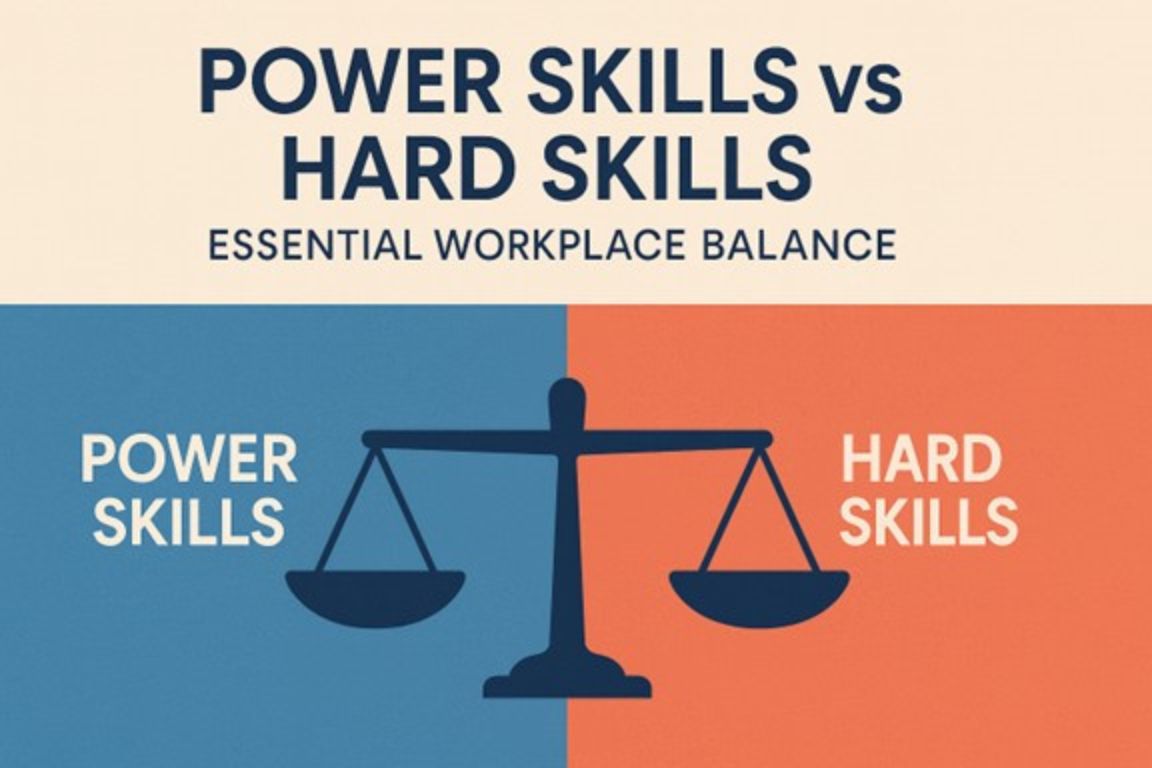
In today’s competitive workplace, building the right blend of technical and interpersonal skills is more important than ever. From coding and data analysis to communication and leadership, the skills you bring to the table shape your ability to grow and succeed.
What are power skills?
Power Skills, often called Soft Skills, are all about how we interact, influence, and collaborate with others. Think communication, emotional intelligence, adaptability, and teamwork. These skills are harder to measure but make a huge difference in how well people work together and lead others.
Some examples of power skills include:
• Communication
• Emotional intelligence
• Presentation skills
• Negotiation skills
• Leading teams
What are hard skills?
Hard skills refer to specific, teachable abilities, usually gained through training or experience. These are the technical or job-specific skills that can often be tested, measured, and certified.
Some examples of hard skills include:
• Coding and programming
• Financial forecasting
• Data analysis
• Graphic design
• Machine operation
Power Skills vs hard skills: what’s the difference?
The main difference lies in how these skills are developed and applied. Hard skills are usually taught through formal education or training and can be easily assessed. Power skills, on the other hand, are developed over time and observed through behaviour and relationships.
Hard skills help you complete tasks. Power skills help you work with others to get those tasks done, effectively, collaboratively, and with impact.
Why power skills matter more than ever
With automation and AI transforming the workforce, it’s human skills, like empathy, leadership, and creative thinking, that are becoming the real differentiators. Employers increasingly value people who can connect, communicate, and lead. These skills help build stronger teams, improve engagement, and drive performance, especially in remote and hybrid work environments.
The value of hard skills
While power skills are rising in demand, hard skills remain essential. They form the technical foundation of your role. Whether you’re in IT, finance, healthcare or the public sector, up-to-date technical knowledge and expertise remain non-negotiable. They’re the must-haves that qualify you for the job.
How they work together
Power skills and hard skills aren’t opposites, they’re partners. When you combine strong technical skills with the ability to collaborate, communicate, and lead, you get the kind of well-rounded professional that employers are hungry for.
For example, a project manager with technical skills in scheduling software plus power skills in stakeholder engagement will deliver better outcomes than someone with just one or the other.
Build your Power Skills at powerskills.com.au
We’ve designed a suite of practical, outcomes-driven courses to help professionals build the Power Skills that today’s employers demand. Whether you’re aiming to lead teams, influence change, or communicate more effectively, there’s a course to match your goals.
Explore the full range at www.powerskills.com.au and take the next step in your development journey.
Final thoughts
Career success today, and into the future, requires more than technical know-how. It takes the ability to collaborate, communicate, lead, and adapt. By investing in both power skills and hard skills, you’ll position yourself for long-term growth and resilience in an ever-evolving workplace.