
Why leaders fail without strong people skills
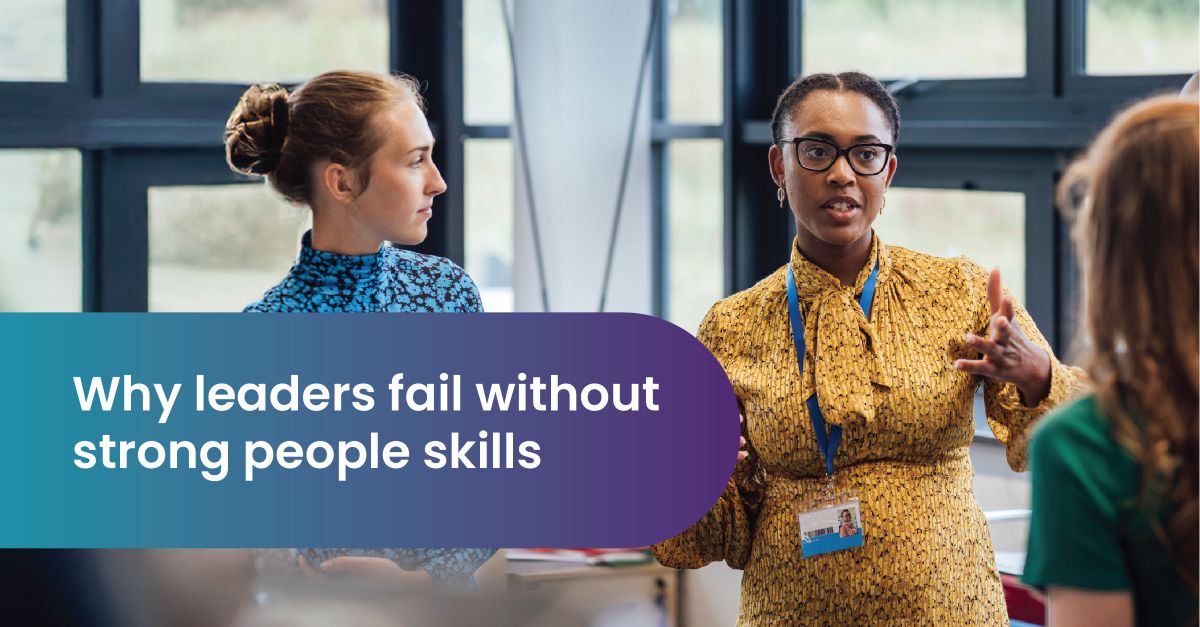
Leadership success is often measured in results: projects delivered, profits achieved, strategies executed. Yet when leaders fail, it is rarely because they lacked technical knowledge or intelligence. More often, they falter because they neglected the very capabilities that sustain trust, engagement, and collaboration — the so-called “soft skills.” At PM-Partners, we call these Power Skills, because they are not optional. They are the foundation of leadership.
This article explores why leaders fail without strong people skills, the consequences for organisations, and how building Power Skills prevents leadership breakdowns.
Why people skills matter in leadership
- Trust: Teams will not follow leaders they don’t trust.
- Engagement: Employees are more likely to disengage or leave if they feel unheard.
- Collaboration: Complex projects require alignment across diverse stakeholders.
- Change: People resist transformation when leaders fail to connect and communicate.
How the absence of Power Skills leads to failure
- Micromanagement
Leaders who can’t trust others tend to micromanage. This stifles innovation and creates resentment. - Avoidance of conflict
Leaders who lack conflict resolution skills let issues fester until they escalate. - Poor communication
Ambiguity and jargon undermine clarity, leaving teams confused. - Lack of empathy
Leaders who fail to understand team pressures create burnout and turnover.
Australian example
An Australian bank reviewed its failed projects over five years. The findings showed that in 70% of cases, failure was linked to poor leadership behaviours — unclear communication, lack of stakeholder engagement, or resistance to feedback. Technical competence was not the issue.
Preventing leadership failure with Power Skills
- Communication training: Leaders need structured ways to deliver clarity and build influence.
- Emotional intelligence development: Building self-awareness and empathy improves trust.
- Coaching skills: Leaders who coach rather than command grow stronger teams.
- Conflict resolution: Addressing disagreements constructively strengthens collaboration.
FAQs
Q: Can technical leaders succeed without people skills?
Not for long. Technical ability must be matched with Power Skills to sustain performance.
Q: What people skills matter most?
Communication, emotional intelligence, conflict resolution, and trust-building.
Q: How can organisations prevent leadership failure?
By embedding Power Skills training into leadership pathways.
Conclusion
Leaders don’t fail because they lack intelligence. They fail because they neglect Power Skills. By investing in people-focused development, organisations create leaders who can both deliver results and sustain engaged, high-performing teams.
👉 Explore our leadership development programs to ensure your leaders succeed.