Soft skills vs Power Skills: why the name matters less than the results
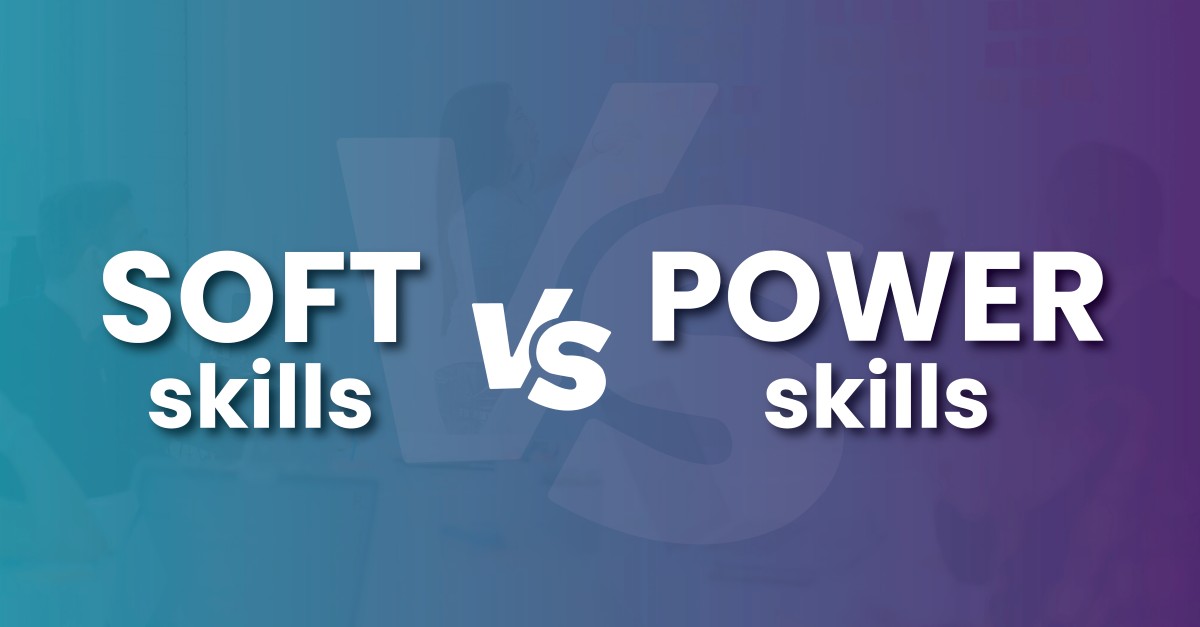
In today’s workplace, everyone talks about the importance of soft skills. Employers say they’re the most sought-after capabilities. Graduates hear they need to develop them to get ahead. Professional associations stress their role in leadership and collaboration.
But here’s the problem: the term soft skills undersells what these skills actually do. There’s nothing “soft” about navigating conflict in a high-stakes meeting, motivating a disengaged team, or persuading a client to adopt a difficult recommendation. These are not nice-to-have extras. They are business-critical abilities that directly influence results.
That’s why at PM-Partners, we use the term Power Skills. They’re the skills that help people lead, communicate, collaborate, and adapt. They’re what turn technical expertise into real-world outcomes.
Still, whether you call them soft skills or Power Skills, one truth remains: it’s the results that matter.
The origins of “soft skills”
The term soft skills first appeared in the US military in the late 1960s. It was used to describe interpersonal and leadership abilities — everything outside of the “hard” technical skills required for equipment and systems. The contrast implied that soft skills were less tangible and harder to measure.
Over time, the business world adopted the term. HR departments, universities, and training providers began to group communication, teamwork, leadership, and emotional intelligence under the “soft skills” banner.
But here’s the issue: calling them soft suggested they were secondary — nice complements to the “real” technical work. In practice, the opposite has proven true. Without these skills, technical expertise often fails to translate into impact.
The rise of Power Skills
In recent years, leading thinkers in leadership and workforce development have pushed back against the “soft skills” label. Deloitte, LinkedIn, and the World Economic Forum all highlight these as critical future capabilities, not optional add-ons.
That’s why we prefer the term Power Skills. It reframes the conversation. Instead of sounding optional, “power” makes clear these skills drive influence, enable leadership, and deliver tangible outcomes.
Think of it this way:
- Hard skills may get you a job.
- Power Skills help you keep it, grow in it, and lead others.
Why demand for these skills is skyrocketing
The demand for Power Skills is not theoretical. It’s reflected in hiring data, workplace trends, and leadership priorities:
- LinkedIn’s 2025 workplace learning report found that 89% of L&D leaders say developing soft skills (Power Skills) is critical to navigating change.
- Deloitte’s human capital trends consistently list adaptability, collaboration, and leadership as the skills most needed for digital transformation.
- The World Economic Forum future of jobs report ranks problem-solving, communication, and leadership in the top 10 skills for the future.
Why? Because workplaces are changing:
- Hybrid and remote teams require stronger communication and trust-building.
- Technology and AI handle routine tasks, leaving humans to focus on creativity, empathy, and problem-solving.
- Economic uncertainty means leaders must rally teams around outcomes despite challenges.
Simply put, Power Skills are the differentiator between good intentions and successful execution.
Core Power Skills that deliver results
So, what are these Power Skills in practice? While every organisation frames them slightly differently, some core themes consistently emerge.
Communication and influence
Clear, confident communication is at the heart of workplace success. It’s not just about speaking well; it’s about active listening, asking the right questions, and adapting your style to your audience. Influence comes from building trust and presenting ideas in ways that resonate.
Example outcome: a project manager secures stakeholder buy-in for a critical change by framing the benefits in terms the audience cares about.
Emotional intelligence (EQ)
EQ is the ability to recognise and manage your own emotions while understanding others’. Leaders with high EQ build stronger teams, handle conflict effectively, and maintain resilience under pressure.
Example outcome: a manager navigates a heated disagreement between team members, turning tension into collaboration.
Teamwork and collaboration
Few major goals are achieved alone. Collaboration requires listening, compromising, and leveraging diverse strengths. Power Skills ensure teams don’t just work side by side but achieve synergy.
Example outcome: cross-functional teams avoid silos and deliver a new product ahead of schedule.
Leadership and people management
Great leaders inspire, motivate, and guide. Power Skills give them the tools to delegate effectively, provide feedback, and create environments where people thrive.
Example outcome: a team with an engaged leader reports higher satisfaction and delivers projects with fewer errors.
Negotiation and conflict resolution
Disagreements are inevitable. The ability to negotiate and resolve conflict constructively prevents issues from escalating and protects relationships.
Example outcome: a negotiator finds a compromise that saves a vendor partnership and avoids costly delays.
Adaptability and resilience
Change is constant. Power Skills help professionals adjust quickly, manage stress, and keep performance steady when conditions shift.
Example outcome: a leader successfully transitions their team to remote work without losing productivity.
Why the results speak louder than the label
Let’s be clear: whether you call them soft skills or Power Skills, what matters is whether they are developed and applied effectively.
Consider these outcomes:
- Organisations that invest in Power Skills report higher employee engagement, lower turnover, and stronger customer satisfaction.
- Projects led by individuals with strong Power Skills are more likely to be delivered on time and on budget.
- Teams with high collaboration and communication outperform those that rely solely on technical expertise.
The name is less important than the impact: better results for people, projects, and organisations.
Embedding Power Skills into workplace learning
So how can organisations ensure they’re not just paying lip service to these skills but actively developing them?
- Make Power Skills part of every career pathway
- Technical experts need communication training just as much as new managers do.
- Graduates need EQ and teamwork skills from day one.
- Align learning to business outcomes
- Don’t just offer “soft skills courses”. Connect them to measurable goals: reducing project delays, improving client retention, boosting team productivity.
- Use blended learning for maximum retention
- Workshops, coaching, role-play, and digital simulations help people practise Power Skills in realistic scenarios.
- Measure impact, not attendance
- Use employee surveys, 360-degree feedback, and business KPIs to assess whether Power Skills training leads to improved outcomes.
- Reinforce at all levels
- Senior leaders need to model Power Skills. If leaders don’t demonstrate communication, empathy, and collaboration, others won’t take training seriously.
Addressing common objections
Some people argue that soft skills can’t be taught — that they’re innate personality traits. But research and practice show otherwise. Like any skill, they can be developed with structured training, coaching, and feedback.
Others say technical skills should come first, especially in industries like IT, engineering, or finance. Yet, countless case studies show projects fail not because of poor technical knowledge, but because of miscommunication, lack of stakeholder alignment, or weak leadership.
That’s why leading organisations invest in Power Skills training: because the return is undeniable.
Why Power Skills matter in Australia
For Australian organisations, there’s a particular urgency around Power Skills development:
- Government projects: federal and state governments consistently highlight the need for better project delivery, citizen-focused services, and collaboration across agencies. Power Skills underpin these priorities.
- Future of work: with hybrid workplaces and new technologies, employers need staff who can adapt quickly and lead through uncertainty.
- Global competitiveness: Australian businesses competing in Asia-Pacific markets need leaders with negotiation, cultural intelligence, and stakeholder engagement skills.
By framing these as Power Skills, Australian organisations can move away from outdated labels and position themselves for long-term success.
Conclusion: focus on outcomes, not labels
The debate over “soft skills” vs “Power Skills” will no doubt continue. Some people will stick with the familiar term. Others, like us, will push for a reframe that better reflects the importance of these capabilities.
But in the end, what matters is not what we call them. What matters is whether we’re helping people build the skills to communicate, lead, adapt, and deliver results.
The name is secondary. The outcomes are everything.
At PM-Partners, our Power Skills training is built around that principle: practical, outcomes-focused courses that empower professionals to succeed in any context.
👉 Explore our Power Skills courses and see how you can build the skills that truly matter.